The Epstein Files Unredaction Saga: When Transparency Clashes with Privacy in the Pursuit of Justice

The Epstein Files Unredaction Saga: When Transparency Clashes with Privacy in the Pursuit of Justice
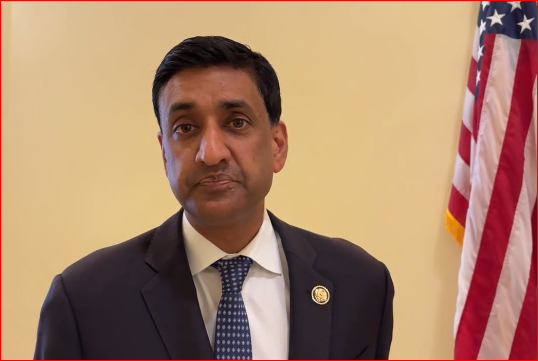
In the ever-evolving landscape of political accountability and the lingering shadows of one of America’s most infamous scandals, a recent development has thrust the Jeffrey Epstein case back into the national spotlight. On February 13, 2026, The Guardian published an article shedding light on a peculiar twist involving U.S. Representative Ro Khanna, a Democrat from California, and his efforts to unmask hidden names in the Epstein files. What began as a bipartisan push for transparency has morphed into a cautionary tale about the unintended consequences of rushing to reveal information without full context, inadvertently dragging innocent individuals into a web of suspicion.
To understand this episode, it’s essential to rewind to the broader context of Jeffrey Epstein’s notorious legacy. Epstein, the disgraced financier and convicted sex offender who died in custody in 2019 under mysterious circumstances, left behind a trail of allegations involving high-profile figures, underage trafficking, and a network of enablers. His associate, Ghislaine Maxwell, was convicted in 2021 for her role in the operation, but questions about who else knew—or participated—have persisted. The release of court documents and files related to Epstein’s cases has been piecemeal, often redacted to protect victims, witnesses, or unrelated parties. These redactions have fueled conspiracy theories and demands from lawmakers for complete disclosure, arguing that powerful individuals might be shielded while survivors are exposed.
Enter Representatives Ro Khanna and Thomas Massie, a Kentucky Republican, who have positioned themselves as champions of openness in this matter. Together, they spearheaded the Epstein Files Transparency Act, a legislative effort aimed at compelling the Department of Justice (DoJ) to lift unnecessary redactions. Their advocacy culminated in a dramatic moment on the House floor, where Khanna publicly recited a list of six names he claimed had been unlawfully concealed by the DoJ in the Epstein documents. He portrayed these individuals as “wealthy, powerful men” whose identities were being protected, implying a cover-up that undermined public trust in the justice system.
However, the DoJ swiftly pushed back, clarifying that four of the six names had absolutely no connection to Epstein or his crimes. According to a department spokesperson, these men were part of a routine photo lineup compiled by the Southern District of New York (SDNY) years ago for investigative purposes—entirely unrelated to the Epstein probe. The lineup, which included 20 names, birthdays, and photos, featured a mix of men and women who bore superficial resemblances to Epstein and Maxwell. Sources for the images were primarily from the New York Police Department (NYPD), with exceptions for Epstein himself, Maxwell, and two victims whose photos came from Palm Beach records and passports.
This photo array appears to have been a standard law enforcement tool, used perhaps to identify suspects or witnesses in unrelated cases. Analysis of the unredacted versions reveals a diverse group: 11 individuals with ties to New York City, many with prior misdemeanor arrests by the NYPD (though outcomes of those cases remain unclear). Among them, five women shared traits like short dark hair and ages in their 40s or 50s, echoing Maxwell’s appearance, while five men had similarities to Epstein in hair, age, and complexion. The file in question surfaces four times on the DoJ’s website, each iteration with varying levels of redaction—sometimes exposing birthdays, other times photos—highlighting the inconsistent handling that Khanna and Massie have criticized.
The four men inadvertently spotlighted by Khanna—Salvatore Nuarte, Leonid Leonov, Zurab Mikeladze, and Nicola Caputo—represent the human cost of this transparency push. These individuals, far from being “wealthy, powerful” figures, lead ordinary lives. Nuarte, a resident of Queens, New York, expressed bewilderment and frustration when contacted. He denied any knowledge of Epstein, stating he had no idea his name was linked until media inquiries began pouring in. Nuarte, who has a history of unrelated NYPD arrests, reached out to Khanna’s office in a bid to clear his name, questioning the DoJ’s competence: “I don’t know if they know what they are doing over there at the justice department. But how can I clear my name?” Khanna’s team responded empathetically, acknowledging the DoJ’s lack of clarity and promising to pursue facts to dispel any misconceptions.
Leonid Leonov, an IT manager also from Queens (whose name was misspelled as “Leonic” in the files but matched via photo and birthday), was equally adamant in his denial. “I don’t even have a second or third degree connection to him. Never worked for him, nothing,” he asserted. Efforts to reach Mikeladze and Caputo were unsuccessful, though Massie’s office took to X (formerly Twitter) to clarify that this Nicola Caputo is not the Italian politician sharing the name, underscoring the potential for mistaken identities in such revelations.
In contrast, the other two names Khanna mentioned—Sultan Ahmed bin Sulayem and Leslie Wexner—do have documented ties to the Epstein saga, albeit in varying degrees. Bin Sulayem, an Emirati billionaire and former CEO of DP World, resigned from his position following the unredaction of an Epstein email that disturbingly referenced “loving the torture video.” This mention sent shockwaves through corporate and international circles, amplifying calls for accountability. Wexner, the retail magnate behind brands like Victoria’s Secret, appears nearly 200 times in the files. His legal team emphasized that he was approached as a source of information in 2019, cooperated fully with authorities, and was never a target of the investigation.
Khanna’s response to the DoJ’s clarification was measured but pointed. On X, he lamented the department’s delayed explanation, arguing that their handling had failed on multiple fronts: neglecting to safeguard survivors, sowing confusion for blameless individuals, and potentially shielding actual abusers. “We must have full transparency and the truth,” he urged. Massie, for his part, claimed credit for the unredactions, including the photo lineup file, but the DoJ countered sharply, accusing the lawmakers of “forcing the unmasking of completely random people” with no Epstein links.
This incident raises profound questions about the balance between transparency and privacy in high-stakes investigations. On one hand, the Epstein case exemplifies how redactions can breed distrust, especially when victims’ names slip through unredacted while those of influential associates remain hidden. Khanna and Massie’s advocacy highlights a bipartisan frustration with bureaucratic opacity, echoing broader debates in Congress about government accountability. Their press conference outside DoJ offices in Washington, D.C., on February 9, 2026, symbolized this resolve.
Yet, the fallout for the four innocent men illustrates the risks. Being named in Epstein-related files, even erroneously, can tarnish reputations irreparably in the age of viral misinformation. Nuarte’s plea to clear his name underscores the personal toll—emotional, professional, and social. The DoJ’s point that these men appear only once in the documents (compared to Wexner’s nearly 200 mentions or Bin Sulayem’s over 4,700) further emphasizes their tangential inclusion. It also prompts scrutiny of law enforcement practices: Why were these individuals selected for the lineup? Their past minor arrests suggest a pool drawn from police databases, but without transparency, speculation abounds.
Looking ahead, this controversy could influence future handling of sensitive files. Calls for reform might include standardized redaction protocols, mandatory explanations for unredactions, or independent oversight to prevent similar mishaps. For survivors of Epstein’s crimes, the episode is a double-edged sword: greater disclosure might expose perpetrators, but erratic releases risk revictimization.
In the grand tapestry of the Epstein scandal, this chapter serves as a reminder that justice is not just about unveiling truths but doing so responsibly. As Khanna aptly put it, the DoJ’s shortcomings have created a quagmire where innocence is questioned, and real accountability remains elusive. Until full, contextual transparency is achieved, the shadows of doubt will linger, affecting not just the powerful but the everyday people caught in the crossfire. This unfolding story, rooted in a quest for clarity, ultimately reveals the complexities of navigating truth in a polarized world.