
World News
Turmoil in the Halls of Justice: Pam Bondi’s Fiery Defense Amid Epstein File Scrutiny
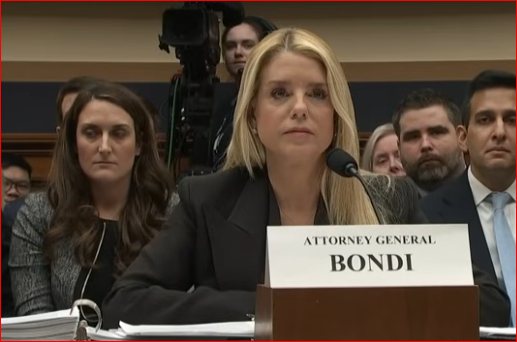
In the charged atmosphere of Washington, D.C., where political battles often unfold like high-stakes theater, a recent House Judiciary Committee hearing turned into a spectacle of raw confrontation and deflection. At the center of the storm was U.S. Attorney General Pam Bondi, a staunch ally of former President Donald Trump, who found herself grilled by Democrats over the Department of Justice’s (DOJ) controversial management of documents tied to the infamous Jeffrey Epstein scandal. What was intended as an oversight session on transparency and accountability devolved into personal barbs, accusations of cover-ups, and a stark display of partisan loyalty. This event, held on a Wednesday in early 2026, underscores the enduring shadows cast by Epstein’s crimes and the deep divisions in American politics.
The hearing stemmed from a bipartisan law passed the previous year, which required the full disclosure of millions of Epstein-related files, allowing only narrow exceptions for redactions to protect sensitive information. Epstein, the disgraced financier who died in federal custody in 2019 while awaiting trial on sex trafficking charges, had long been a symbol of elite impunity. His network allegedly ensnared powerful figures across business, politics, and entertainment in a web of exploitation. The mandated release was meant to bring long-overdue clarity, but instead, it has ignited fresh controversies. The DOJ, under Bondi’s leadership in the Trump administration’s return to power, missed the statutory deadline for the release. When the documents finally emerged, critics pointed to glaring issues: the unredacted exposure of survivors’ identities, which risked their privacy and safety, and the opaque redaction of names potentially linked to criminal acts, without any justification provided.
Democrats on the committee, armed with pointed questions, sought to hold Bondi accountable for these lapses. Representative Pramila Jayapal of Washington led one of the most poignant exchanges, pressing Bondi on the department’s failures and urging her to turn and offer a direct apology to Epstein victims who were present in the room as observers. These survivors, bearing the scars of trauma, represented the human cost at the heart of the inquiry. Bondi’s response was dismissive and unyielding. “I’m not going to get in the gutter with this woman. She’s doing theatrics,” she snapped, refusing to engage or acknowledge the victims’ presence. This moment crystallized the hearing’s tone: one of evasion rather than empathy, where the attorney general prioritized combativeness over contrition.
The fireworks intensified during Bondi’s clash with Jamie Raskin of Maryland, the ranking Democrat on the committee. Raskin, known for his sharp intellect and procedural rigor, attempted to rein in Bondi’s lengthy, rambling responses that seemed designed to consume the limited five-minute questioning slots allotted to each member. At the hearing’s outset, Raskin had cautioned against such tactics, emphasizing the need for concise answers to facilitate meaningful dialogue. Bondi’s retort was explosive: “You don’t tell me anything,” she yelled, escalating the tension. In a particularly cutting remark, she branded Raskin a “washed-up loser lawyer” and even questioned his credentials, declaring, “You’re not even a lawyer.” This personal attack not only derailed the discussion but also highlighted Bondi’s combative style, reminiscent of Trump’s own rhetorical playbook.
Zoe Lofgren, a seasoned Democrat from California, brought a more measured but no less critical approach, focusing on the DOJ’s erratic handling of redactions. She described instances where documents were hastily uploaded to the department’s website, only to be pulled down after errors were spotted—such as improper releases or inconsistent blackouts. Lofgren argued that these missteps had eroded public trust in the justice system, stating that the department had “lost credibility” through its overly broad and unexplained redactions. Bondi, however, sidestepped these specifics. Instead, she pivoted to praising Trump as “the greatest president in American history” and accused Lofgren of fixating on him out of political bias. “I find it interesting that she keeps going after President Trump,” Bondi remarked, further alleging that Democrats were deflecting from their own ties to figures like Reid Hoffman, the LinkedIn co-founder who admitted to professional meetings with Epstein for MIT fundraising purposes—six encounters in total, by his account.
This deflection tactic extended to broader accusations against the opposition. Bondi suggested that the hearing was less about justice for Epstein’s victims and more about a “circus” orchestrated by Democrats to undermine Trump’s achievements. She referenced Hoffman’s donations to Democratic causes, implying hypocrisy, even as the files themselves painted a more complex picture of Epstein’s orbit. Notably, the released documents have uncovered previously underreported connections between Epstein and individuals close to Trump. For instance, U.S. Commerce Secretary Howard Lutnick, former Trump strategist Steve Bannon, and tech mogul Elon Musk—all influential figures in the current administration or its sphere—emerged with ties to Epstein that were deeper than publicly acknowledged. None of these men have faced charges related to Epstein’s activities, and they have denied any wrongdoing. Yet, their inclusions in the files add layers of intrigue to the narrative, suggesting that Epstein’s influence permeated both sides of the political aisle.
Perhaps the most charged moment came during Bondi’s exchange with Ted Lieu, another California Democrat with a background in military prosecution. Lieu directly confronted Bondi on Trump’s potential involvement, asking whether the former president had ever attended parties involving underage girls—a reference to longstanding rumors and file mentions. Bondi’s defense was swift and vehement: “This is so ridiculous,” she exclaimed, insisting there was “no evidence that Donald Trump has committed a crime” and framing the question as an attempt to distract from Trump’s “great things.” Lieu pushed back, suggesting that Bondi’s blanket denial might itself constitute lying under oath, given Trump’s repeated appearances in the documents. One file notes Epstein claiming Trump “knew about” the girls but declined massages; another cites Michael Reiter, the former Palm Beach police chief, who told the FBI that Trump had acknowledged widespread knowledge of Epstein’s behavior during the initial investigations. Additional uncorroborated tips also reference Trump, though he has consistently denied any impropriety and has never been charged.
Bondi’s reaction was one of outrage: “Don’t you ever accuse me of committing a crime,” she shouted, her voice echoing the hearing’s descent into acrimony. This back-and-forth exemplified how the Epstein files have become a proxy for larger political wars, with Trump’s name invoking fierce loyalty from his appointees.
Even within her own party, Bondi faced pushback. Republican Representative Thomas Massie of Kentucky, who had sponsored the disclosure legislation, challenged her attempts to shift blame onto previous administrations. Bondi argued that the Epstein cover-up spanned decades, implicating not just the Biden era but also the Obama and George W. Bush presidencies. Massie, however, was unmoved. “This goes over four administrations. You don’t have to go back to Biden. Let’s go back to Obama. Let’s go back to George Bush,” he countered, emphasizing that the current administration bore responsibility for its portion of the mishandling. This intra-party tension revealed cracks in the Republican front, as Massie’s commitment to transparency clashed with Bondi’s defensive posture.
The hearing’s broader implications are profound. Traditionally, the DOJ has maintained a firewall of independence from the White House to preserve the integrity of law enforcement and avoid even the appearance of political meddling. Under Trump’s influence, however, this norm has been repeatedly tested and, as critics argue, shattered. Bondi’s unapologetic alignment with the president—praising him effusively while lambasting opponents—exemplifies this shift, raising concerns about the politicization of justice. For Epstein’s survivors, the event was a painful reminder that their quest for full accountability remains mired in partisan gridlock. The files, while illuminating some truths, have also exposed the challenges of redaction in a digital age, where errors can compound trauma.
As the dust settles from this volatile session, questions linger: Will the DOJ rectify its redactions and provide clearer explanations? Can bipartisan efforts like Massie’s law overcome the rancor to deliver genuine transparency? And how will these revelations reshape public perceptions of power and privilege in America? The Epstein saga, far from resolved, continues to unravel threads that connect the past to the present, demanding a reckoning that transcends political theater. In the end, hearings like this one serve as a mirror to a divided nation, where the pursuit of truth often collides with the armor of allegiance.