

NASA’s Lunar Leap: Why Scrapping the Orbiting Gateway for a $20 Billion Moon Base Could Redefine Humanity’s Cosmic Future
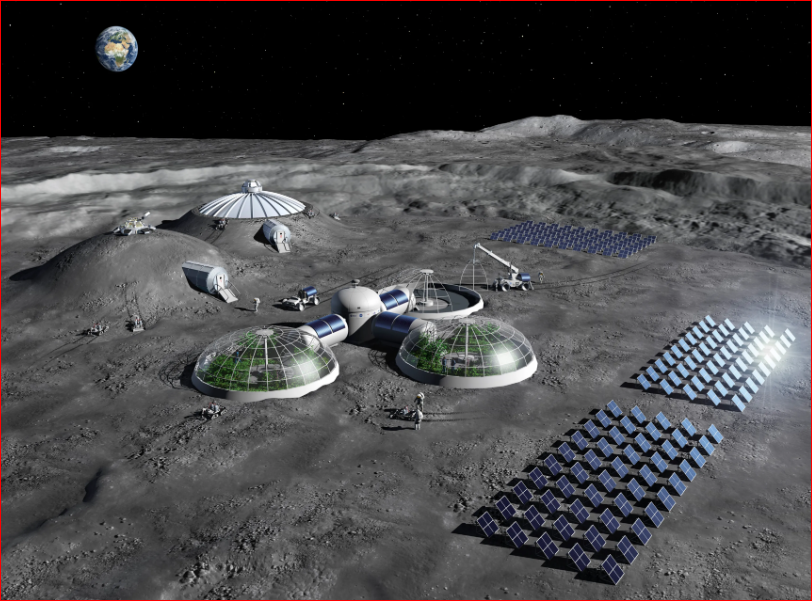
In a stunning pivot that has sent shockwaves through the global space community, NASAhttps://www.nasa.gov/nasa-brand-center/images-and-media/ has officially canceled its long-planned Lunar Gateway orbiting space station and is redirecting resources toward building a massive, permanent base directly on the Moon’s surface. Announced on March 24, 2026, by new NASA Administrator Jared Isaacman, the agency will invest approximately $20 billion over the next seven years to establish sustained human operations on the lunar terrain—repurposing hardware already built for the Gateway project. This isn’t just a budget tweak; it’s a bold reimagining of America’s Artemis program, prioritizing boots-on-the-ground permanence over a floating waystation. As Isaacman put it during a high-profile event at NASA headquarters, “This revised step-by-step approach to learn, build muscle memory, bring down risk, and gain confidence is exactly how NASA achieved the near impossible in the 1960s.”
The decision marks a seismic shift in U.S. lunar ambitions. For years, the Lunar Gateway was envisioned as the cornerstone of Artemis—a small, crew-tended space station in a near-rectilinear halo orbit around the Moon. It would serve as a docking hub for Orion crew capsules, lunar landers, and international partners, acting as a “transfer station” for astronauts descending to the surface. Largely constructed by contractors like Northrop Grumman and Intuitive Machines’ Lanteris Space Systems subsidiary, the Gateway was already a multi-billion-dollar investment. But challenges mounted: hardware delays, escalating costs, and criticism that it distracted from more direct surface operations. Now, those components—habitat modules, power systems, and docking ports—will be repurposed for a ground-based outpost, accelerating the timeline for a true lunar foothold.
Why this dramatic change now? Enter Jared Isaacman, the billionaire entrepreneur and SpaceX veteran appointed by President Donald Trump in late 2025. Taking the helm in December, Isaacman wasted no time shaking up the Artemis program, which launched in 2017 during Trump’s first term as a grand sequel to the Apollo era. The urgency? China’s aggressive timeline to land taikonauts on the Moon by 2030. With Beijing’s Chang’e missions already scouting resources and testing landers, the U.S. is determined not to cede the high ground—literally. “It should not really surprise anyone that we are pausing Gateway in its current form and focusing on infrastructure that supports sustained operations on the lunar surface,” Isaacman told delegates, companies, and lawmakers at the Washington event.
The new moon base plan unfolds in phased stages, emphasizing modularity and reusability. Phase One, budgeted at around $10 billion, shifts from bespoke, infrequent missions to a repeatable approach: robotic landers, drone fleets for surveying, and initial habitat deployments. Expect solar arrays, 3D-printed regolith structures for radiation shielding, and nuclear power systems to keep the lights on during the two-week lunar nights. Later phases will incorporate in-situ resource utilization (ISRU)—extracting water ice from polar craters for oxygen and fuel—along with expandable habitats, rovers, and scientific labs. NASA aims for the first sustained crewed presence by 2028, aligning with Artemis III’s targeted crewed landing. This isn’t a pop-up camp; it’s the blueprint for a self-sustaining lunar village, potentially housing dozens of astronauts and supporting commercial ventures.
Tying into this lunar pivot is an even more audacious element: a nuclear-powered spacecraft bound for Mars. Dubbed Space Reactor 1 Freedom, the craft is slated for launch before the end of 2028. It will demonstrate advanced nuclear electric propulsion (NEP) in deep space—a game-changer for reducing transit times to Mars from months to weeks. Once there, it deploys helicopters for aerial exploration, echoing Ingenuity’s success on the Red Planet but on steroids. “NASA called this a major step forward in bringing nuclear power and propulsion from the laboratory to space,” the announcement noted. This dual focus—Moon base today, Mars tomorrow—positions Artemis as more than a lunar return; it’s a proving ground for interplanetary civilization.
Of course, not everyone’s thrilled. International partners who poured expertise and hardware into the Gateway—Japan’s contributions to power systems, Canada’s robotic arms, and Europe’s modules—now face uncertainty. European Space Agency chief Josef Aschbacher, present at the announcement, said his team would “study the new plans and continue talking to NASA.” Isaacman assured that “despite some of the very real hardware and schedule challenges, we can repurpose equipment and international partner commitments to support surface and other program objectives.” Still, this could strain alliances built over decades, forcing renegotiations amid a heated space race.
On the private sector front, the shakeup ripples through contracts worth billions. Elon Musk’s SpaceX and Jeff Bezos’ Blue Origin are locked in a high-stakes race to develop human-rated lunar landers. Both have slipped schedules—SpaceX by about two years per NASA’s inspector general—with complex engineering hurdles like cryogenic fuel management and safe descents in 1/6th gravity. NASA’s acting associate administrator Lori Glaze hinted at flexibility: “We will use whichever lander is ready first instead of sticking to a pre-determined order.” SpaceX is even tweaking Starship designs for alternative docking orbits, streamlining for speed. This competitive edge could accelerate innovation, but it also risks stranding billions in sunk costs if timelines slip further.
Technically, building on the surface poses formidable challenges. The Moon’s environment is unforgiving: extreme temperature swings (-173°C to 127°C), micrometeorite bombardments, abrasive regolith that clogs everything, and lethal radiation without a magnetic field. Yet, the rewards are immense. Polar regions hold water ice—potentially billions of tons—for propellant, life support, and even rocket fuel via electrolysis. A surface base enables long-duration science: studying lunar geology for clues to Earth’s origins, testing ISRU for Mars habitats, and even astronomy from the radio-quiet far side. Economically, it could spawn a lunar economy—mining helium-3 for fusion, tourism via Starship hops, or manufacturing in low gravity. Imagine 3D-printed solar farms powering a thriving outpost, with astronauts farming in hydroponic domes under Earthrise views.
Historically, this pivot echoes Apollo’s audacity while learning from its limitations. Apollo 11’s 1969 triumph was a sprint; Artemis is a marathon. The original Gateway was born from the need for a stable platform amid orbital mechanics complexities—distant retrograde orbits minimized fuel use for transfers. Critics argued it added unnecessary layers of risk and cost, diverting focus from surface tech. Isaacman’s team, drawing on private-sector agility, is betting that direct surface ops build “muscle memory” faster. NASA’s inspector general reports and congressional hearings highlighted Gateway delays; repurposing now cuts waste and accelerates the 2028 landing goal.
Geopolitically, the move intensifies the U.S.-China rivalry. Beijing’s International Lunar Research Station (with Russia) eyes the south pole, rich in volatiles. If NASA plants flags—and habitats—first, it secures strategic high ground, potentially influencing future space treaties on resource claims. Domestically, the $20 billion infusion (spread over years) could boost jobs in aerospace hubs like Florida, Texas, and California, while inspiring a new generation of STEM talent. Yet, skeptics question funding sustainability amid ballooning federal deficits and competing priorities like Earth climate missions.
Looking ahead, this moon base isn’t an endpoint—it’s a launchpad. Sustained presence tests closed-loop life support, psychological resilience for multi-year missions, and autonomous robotics for construction. Success here slashes Mars risks: shorter trips via lunar refueling depots, proven nuclear power, and a trained workforce. By the 2030s, we could see multinational crews rotating through lunar outposts, commercial hotels under transparent domes, and cargo runs ferrying rare metals back to Earth. The nuclear Mars demonstrator alone could halve travel times, making crewed Red Planet missions viable by the 2040s.
Critics might decry the cancellation as another Artemis delay, but the data suggests otherwise. With SLS rockets rolling out (as seen in recent Kennedy Space Center preparations) and Orion capsules maturing, the program is gaining momentum. Isaacman’s vision—pragmatic, risk-tolerant, and future-oriented—could finally deliver what Apollo promised: not flags and footprints, but homes among the stars.
As we stand on the cusp of this new lunar dawn, one thing is clear: NASA’s pivot isn’t retreat—it’s reinvention. From the dust of the Moon’s ancient craters will rise humanity’s first extraterrestrial civilization. The stars have never felt closer, and the base on the horizon? It’s calling us home. What began as an orbiting dream transforms into a grounded reality—one small step, one giant leap, for all humankind.
