

Solo Travel Tips: A Complete Guide to Traveling Alone With Confidence
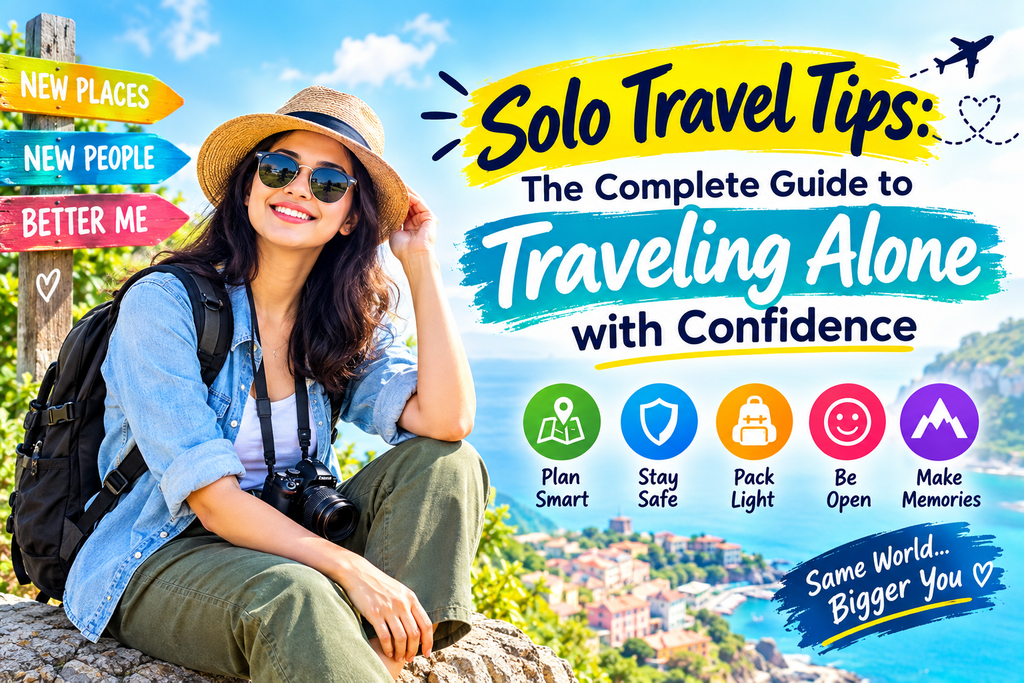
Solo travel is one of the most rewarding ways to discover the world and, perhaps more importantly, discover yourself. Traveling without friends, family, or a tour group gives you complete freedom to decide where to go, what to see, when to rest, and how to spend your time. At first, the idea of traveling alone can feel intimidating. You may wonder about safety, loneliness, planning, transportation, accommodation, or what you would do if something went wrong.
The good news is that solo travel does not have to be complicated. With thoughtful preparation and a few practical habits, traveling alone can become an exciting, comfortable, and confidence-building experience.
Whether you are planning your first weekend getaway or a longer international adventure, the following solo travel tips can help you prepare properly and enjoy your journey to the fullest.
Why Should You Try Solo Travel?
Solo travel offers a level of independence that is difficult to experience during group trips. When you travel with others, decisions often depend on everyone’s preferences. One person may want to visit a museum while another prefers the beach. Someone may want to wake up early, while another wants to sleep until noon.
When you travel alone, you make the decisions.
You can wake up whenever you want, change your itinerary, spend three hours at a beautiful location, or leave a destination earlier than planned. There is no need to compromise.
Solo travel can also help develop valuable personal skills. You learn how to navigate unfamiliar places, communicate with strangers, solve unexpected problems, manage money, and make decisions independently.
Most importantly, traveling alone can increase self-confidence. Successfully handling unfamiliar situations can make you realize that you are capable of much more than you previously believed.
1. Start With a Manageable Destination
If this is your first solo trip, you do not necessarily need to begin with a month-long international adventure.
Start small.
Consider taking a one- or two-day trip to a destination that is relatively easy to reach. A nearby city, beach, hill station, historical location, or nature destination can be a good starting point.
A short first trip allows you to understand what solo travel feels like without creating unnecessary pressure.
Once you become comfortable traveling alone, you can gradually choose longer and more challenging destinations.
2. Research Your Destination Before Leaving
Research is one of the most important parts of successful solo travel.
Before leaving home, learn about the destination’s transportation system, local customs, weather, major attractions, accommodation areas, and common tourist scams.
You should also know basic information such as:
- Which neighborhoods are generally convenient for visitors
- How to get from the airport or station to your accommodation
- What transportation options are available
- Which areas may be better avoided late at night
- Local emergency numbers
- Common payment methods
- Whether internet access is reliable
- Local cultural expectations
You do not need to plan every minute of your trip. In fact, leaving some free time can make the journey more enjoyable.
The goal is to understand your surroundings well enough that you can make informed decisions.
3. Create a Flexible Itinerary
A common mistake among first-time travelers is creating an extremely detailed schedule.
Although planning is useful, your itinerary should leave room for unexpected experiences.
Instead of planning every hour, identify the main attractions or activities you want to experience each day. Then leave several hours for exploration, rest, food, shopping, or spontaneous discoveries.
For example, you might plan to visit a famous landmark in the morning and leave the afternoon open.
Flexibility is particularly valuable during solo travel because you do not have to coordinate your schedule with anyone else.
If you discover an interesting local market or beautiful café, you can simply change your plans.
4. Choose Your Accommodation Carefully
Accommodation is especially important when traveling alone.
A cheap room may not always be the best choice if it is located far from transportation, attractions, or well-populated areas.
When selecting accommodation, consider:
- Location
- Guest reviews
- Security features
- Reception availability
- Transportation access
- Cleanliness
- Internet availability
- Check-in and check-out policies
Read recent reviews rather than relying only on the property’s overall rating.
Pay attention to comments about the neighborhood, noise, cleanliness, staff behavior, and safety.
For some solo travelers, hostels can be an excellent way to meet people. Hotels and private accommodations may be better if you prefer privacy and quiet.
Choose according to your personality and comfort level.
5. Pack Light
One of the best solo travel tips is to avoid carrying too much.
When you travel alone, you are responsible for your luggage. Carrying several large bags can make transportation much more difficult.
Try to pack versatile clothing that can be used for multiple situations.
Essential items may include:
- Comfortable clothing
- Walking shoes
- Basic toiletries
- Phone and charger
- Power bank
- Necessary medications
- Travel documents
- Small first-aid supplies
- Reusable water bottle
- Copies of important documents
Before packing something, ask yourself whether you genuinely need it.
A lighter bag gives you more freedom and makes moving between destinations easier.
6. Keep Important Documents Secure
Your passport, identification, tickets, accommodation information, and financial documents are extremely important during travel.
Keep your original documents somewhere secure and maintain digital copies of important information.
You can store copies in a secure cloud account or another protected location.
It is also wise to keep emergency contact information separately from your phone in case your phone becomes unavailable.
Do not carry all your money and important cards in one place. Having a backup payment method can be extremely helpful if your primary card is lost or blocked.
7. Tell Someone About Your Travel Plans
Even though you are traveling alone, someone you trust should know where you are going.
Share your basic itinerary with a family member or trusted friend.
You can provide:
- Destination details
- Accommodation information
- Approximate travel dates
- Transportation details
- Emergency contact information
You do not necessarily need to send constant updates. However, checking in occasionally can provide additional peace of mind.
Some travelers also use location-sharing features with a trusted person, particularly when visiting unfamiliar places.
8. Learn Basic Local Phrases
You do not need to become fluent in the local language before traveling.
Learning a few basic expressions can make your trip significantly easier.
Useful phrases include:
- Hello
- Thank you
- Please
- Excuse me
- How much?
- Where is…?
- I need help
- I don’t understand
- Where is the nearest hospital?
- Where is the police station?
Even attempting a few local words can create a positive connection with residents.
Language is not only about communication; it can also show respect for the local culture.
9. Be Aware of Your Surroundings
Situational awareness is one of the most important safety habits for solo travelers.
When walking through unfamiliar places, pay attention to your surroundings rather than spending all your time looking at your phone.
Avoid displaying expensive electronics, large amounts of cash, or valuable jewelry unnecessarily.
If you feel uncomfortable in a particular location, trust your instincts and leave.
You do not need to prove that you can handle an uncomfortable situation. Your safety and comfort should come first.
10. Be Careful With Your Personal Information
Meeting new people is one of the exciting parts of solo travel, but you should maintain reasonable boundaries.
You do not need to tell strangers exactly where you are staying, how long you will be there, or how much money you have.
If someone asks overly personal questions, you can politely provide a general answer.
For example, instead of revealing the exact name of your accommodation, you might simply say that you are staying somewhere nearby.
Friendly does not have to mean completely open.
11. Avoid Excessive Drinking When Alone
Alcohol can reduce awareness and make it harder to respond effectively to unexpected situations.
If you choose to drink while traveling, keep it moderate and stay aware of your surroundings.
Never leave your drink unattended, and make sure you have a safe way to return to your accommodation.
Remember that when you travel alone, there is no companion immediately available to help if you become unable to navigate your surroundings.
12. Use Reliable Transportation
Transportation can be one of the most confusing parts of solo travel.
Before using taxis, ride-sharing services, buses, trains, or other transportation options, learn how the local system works.
Use official transportation services whenever possible.
If using a ride-sharing service, verify the vehicle and driver information before getting inside.
At airports and train stations, be cautious of people who aggressively approach you offering transportation or tours.
Researching transportation before arrival can save time, money, and stress.
13. Keep Your Phone Ready
Your smartphone can become one of your most useful travel tools.
Before leaving, download important maps or information that may be useful without an internet connection.
Keep your phone charged and carry a power bank when possible.
Useful phone features and applications may include:
- Offline maps
- Translation tools
- Transportation apps
- Accommodation information
- Emergency contacts
- Digital travel documents
- Currency conversion tools
However, do not depend entirely on your phone. Technology can fail, batteries can die, and internet access can disappear.
Having some important information written down can provide a useful backup.
14. Manage Your Travel Budget
Traveling alone means you are responsible for the entire budget.
Before leaving, estimate your expenses for:
- Transportation
- Accommodation
- Food
- Attractions
- Shopping
- Emergency expenses
- Travel insurance
- Miscellaneous costs
Create a daily spending limit if necessary.
You do not need to follow it perfectly, but having a general budget helps prevent unpleasant surprises.
It is also wise to maintain an emergency fund that you do not use for normal sightseeing or shopping.
15. Eat Like a Local
Food can be one of the best ways to experience a destination.
Solo travel gives you the freedom to choose exactly what you want to eat.
Try local dishes, visit traditional markets, explore neighborhood restaurants, or ask residents for recommendations.
However, be sensible about food hygiene.
If a restaurant appears extremely dirty or food has clearly been sitting outside in unsafe conditions, consider choosing another option.
A little caution can help prevent your trip from being disrupted by avoidable food-related problems.
16. Don’t Be Afraid of Eating Alone
Many first-time solo travelers feel uncomfortable sitting alone in a restaurant.
There is no need to feel embarrassed.
Bring a book, listen to music, plan your next activity, or simply observe the surroundings.
Over time, eating alone can become one of the most peaceful parts of solo travel.
You may also discover that many restaurants regularly serve solo customers.
17. Meet People, But Keep Your Boundaries
Solo travel does not mean you must spend the entire trip alone.
You can meet other travelers through hostels, walking tours, group activities, workshops, cultural events, or social spaces.
These interactions can lead to friendships and memorable experiences.
However, remember that meeting someone while traveling does not automatically mean you should trust them completely.
Enjoy conversations and social experiences while maintaining sensible boundaries.
18. Trust Your Instincts
Sometimes your instincts notice something before your logical mind can explain it.
If a person, place, or situation feels wrong, you do not need to remain there simply because you cannot explain why.
Move toward a busier location, contact someone you trust, or seek assistance from appropriate local authorities or staff.
Your intuition is not always perfect, but paying attention to discomfort can be an important safety habit.
19. Plan for Emergencies
Hopefully, you will never experience a serious problem during your trip.
Nevertheless, preparation matters.
Know how to contact emergency services in your destination.
You should also know the location of your country’s embassy or consular services if traveling internationally.
Keep basic emergency information easily accessible.
Travel insurance may also be worth considering, particularly for international trips where medical care, cancellations, lost baggage, or other unexpected expenses can become costly.
20. Take Care of Your Health
Travel can be physically demanding.
Walking for hours, changing time zones, eating unfamiliar food, and sleeping in different environments can leave you exhausted.
Give yourself enough time to rest.
Drink sufficient water, eat balanced meals when possible, and wear comfortable footwear.
Do not try to see every attraction in a single day.
A slower trip can often be more enjoyable than an exhausting checklist of destinations.
21. Keep a Backup Plan
Things do not always go according to schedule.
Flights may be delayed. Trains can be canceled. Hotels can make mistakes. Weather can change your plans.
Instead of becoming frustrated, prepare alternative options.
Know at least one backup transportation method and keep some extra money available.
The ability to adapt is one of the most valuable skills a solo traveler can develop.
22. Take Photos, But Experience the Moment
Photography is an important part of travel, but do not spend the entire journey behind a camera or smartphone.
Take photographs of beautiful places, interesting food, architecture, people, and memorable moments.
Then put your phone away for a while.
Look around.
Listen to the sounds of the city.
Watch the sunset.
Talk to a local person.
Sometimes the memories that stay with you longest are the moments you never photographed.
23. Enjoy Your Own Company
Perhaps the greatest lesson of solo travel is learning to enjoy your own company.
At first, silence may feel strange.
You may miss having someone beside you during meals or sightseeing.
But eventually, you may begin to appreciate the freedom.
You can walk without explaining where you are going. You can change plans whenever you want. You can sit quietly and think.
Solo travel provides an opportunity to understand your personality, interests, strengths, and weaknesses in a new environment.
24. Don’t Try to Make the Trip Perfect
Every journey has imperfect moments.
You might miss a bus, choose the wrong restaurant, get caught in bad weather, or accidentally take the wrong road.
These experiences can become part of the story.
Instead of expecting everything to go perfectly, expect some surprises.
A flexible mindset can turn a stressful situation into an interesting memory.
25. Start Your Solo Adventure With Confidence
Solo travel may feel frightening before your first journey, but preparation can reduce much of that fear.
Start with a manageable destination. Research carefully. Choose accommodation wisely. Pack light. Protect your documents. Maintain communication with someone you trust. Stay aware of your surroundings and listen to your instincts.
At the same time, remember why you decided to travel.
Travel is not simply about collecting photographs or checking destinations off a list.
It is about experiencing new cultures, seeing unfamiliar landscapes, meeting different people, challenging yourself, and creating memories.
Your first solo journey may not be perfect, and it does not need to be.
The real achievement is stepping outside your comfort zone and discovering that you can navigate the world on your own.
Final Thoughts
Solo travel is a personal journey as much as it is a physical one. It teaches independence, patience, adaptability, confidence, and curiosity.
You do not need to be fearless to travel alone. You simply need to be prepared enough to handle uncertainty and confident enough to take the first step.
Choose a destination that feels manageable, make sensible preparations, respect local cultures, prioritize safety, and leave enough room for spontaneous experiences.
The world is full of places waiting to be explored—and sometimes the best person to explore them with is yourself.
Frequently Asked Questions
1. Is solo travel safe?
Solo travel can be safe when you research your destination, stay aware of your surroundings, protect your belongings, and make sensible decisions.
2. What is the best destination for a first solo trip?
A destination that is easy to navigate, has reliable transportation, and offers suitable accommodation is generally a good choice for beginners.
3. How can I avoid feeling lonely while traveling alone?
Join group tours, stay in social accommodations, attend local activities, talk with other travelers, or stay connected with friends and family.
4. Should I travel alone with cash?
Carry enough cash for small expenses, but avoid carrying all your money in one place. Keep a backup payment option available.
5. What is the most important solo travel tip?
Prioritize your safety and trust your instincts. Good preparation allows you to enjoy the freedom of solo travel with greater confidence.
Visit OUR Website:
Website: https://news-reflects.blogspot.com ❤️❤️
https://newsreflects.com ❤️❤️
https://songbadreflect.blogspot.com
https://newsforall13.blogspot.com
Visit SOCIAL Media
YouTube: https://www.youtube.com/@WhisperedKingdoms-1981 ❤️❤️
https://www.youtube.com/@sonbadreflects1981 (Bangla Language)
https://www.youtube.com/@newsreflects1981
Facebook: https://www.facebook.com/whisperedkingdoms 🌹
https://www.facebook.com/songbadreflect
https://www.facebook.com/newsreflects/ ❤️❤️
https://www.facebook.com/newsreflects
https://www.facebook.com/ishadealsbd/
Pinterest: https://www.pinterest.com/ishatravelnews
https://www.pinterest.com/sultanaisha86/