
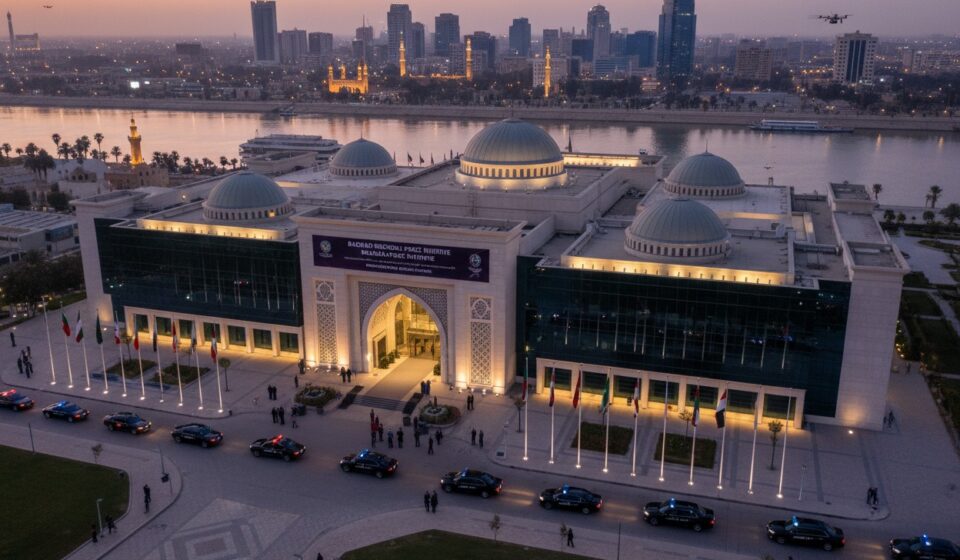
Iraq Steps In: A New Bid to Rebuild Trust Between Saudi Arabia and Iran

Baghdad Positions Itself as Regional Peacemaker Amid Rising Gulf Tensions
For years, Iraq has occupied an uncomfortable middle ground in the Middle East’s most consequential rivalry — caught between its powerful eastern neighbor, Iran, and the Sunni Arab heavyweight to its south and west, Saudi Arabia. Now, Baghdad is attempting to convert that uncomfortable position into diplomatic leverage. In a move announced this week, the Iraqi government has formally proposed the creation of a joint security coordination mechanism involving Iran and Saudi Arabia, describing the current state of relations between Riyadh and Tehran as suffering from what officials call a genuine “crisis of trust.”
The proposal was unveiled by Qasim al-Araji, the Security Affairs Adviser to the Iraqi Prime Minister, who is acting on behalf of Prime Minister Ali al-Zaidi’s government. Speaking on Iraqi state television, al-Araji confirmed that Baghdad had already presented the idea directly to both Tehran and Riyadh, though he offered few specifics about how such a council would actually function — who would sit on it, at what level officials would be represented, or what its precise mandate would look like. What he did make clear is the underlying diagnosis: the friction between the two regional giants isn’t rooted in a single dispute or flashpoint, but in a deeper erosion of confidence that has built up over years of proxy conflict, competing alliances, and mutual suspicion.
Why Now? The Backdrop of Escalating Regional Tension
Iraq’s timing is far from coincidental. The proposal comes at a moment of significant strain across the wider region. Saudi Arabia has in recent months intercepted and destroyed multiple drones aimed at its territory, including strikes targeting oil infrastructure and areas near the capital, Riyadh. Saudi officials have pointed to armed factions operating from within Iraqi territory as the source of at least some of these attacks, deepening Riyadh’s frustration with Baghdad’s ability — or willingness — to rein in Iran-aligned militias operating inside its borders.
This is not an abstract concern for Iraq. The country has repeatedly found itself caught in the crossfire of a broader regional confrontation that has included direct military exchanges between Iran and Israel, as well as a wave of strikes attributed to various armed groups across Iraq, Jordan, the Gulf states, and the Kurdistan region. Against this backdrop, joint American and Saudi airstrikes reportedly targeting sites linked to Iraq’s Popular Mobilization Forces (PMF) drew sharp criticism from Baghdad, which framed the strikes as a violation of Iraqi sovereignty. That episode appears to have sharpened Iraqi officials’ sense of urgency: if Iraq does not actively manage the fallout of the Saudi-Iran rivalry, its own territory risks becoming a permanent battleground for a conflict that is not fundamentally its own.
Adding another layer of complexity, Iranian officials have reportedly pressed Iraqi authorities for financial guarantees benefiting Iranian-backed contractors and have shown interest in building alternative financial channels with BRICS partners to reduce dependence on Western-controlled systems. Meanwhile, regional voices cited by Middle East media outlets suggest that Riyadh wants Baghdad to take firmer, more visible action — potentially including arrests and prosecutions — against the leaders of Iran-aligned militias it blames for cross-border attacks. Iranian commanders have, in turn, urged restraint on some of these same militia networks, reportedly out of concern over deepening security cooperation between Saudi Arabia, Turkey, and Pakistan.
In other words, Iraq is not proposing this security council in a vacuum. It is doing so while simultaneously managing pressure from Washington, Riyadh, and Tehran all at once — each of which has its own expectations of how Baghdad should behave.
What Iraq Is Actually Proposing
At its core, the idea floated by al-Araji is straightforward in concept, even if the mechanics remain undefined: a trilateral or multilateral security coordination body that would give Iran and Saudi Arabia a structured channel to address disputes, de-escalate tension, and prevent misunderstandings from spiraling into open confrontation — with Iraq positioned as the convening party and, potentially, as a guarantor of the process.
This is a notable evolution in Iraq’s foreign policy posture. Historically, Iraq has functioned as a passive battleground for Saudi-Iranian rivalry rather than an active broker of peace between the two. Armed groups aligned with Iran have used Iraqi territory to stage attacks against Saudi Arabia, while Saudi and allied forces have on occasion struck targets inside Iraq in response. That dynamic has made Iraq’s government look, at times, like a bystander unable to control events happening within its own borders. The new security council proposal represents an attempt to reverse that narrative — to reposition Iraq from being the arena where the Saudi-Iran conflict plays out to being the platform where it gets resolved, or at least managed.
Notably, al-Araji also emphasized that Baghdad’s push to bring all weapons under the exclusive control of the Iraqi state is a sovereign Iraqi decision, not one made in response to outside pressure. He stressed that decisions over war and peace belong solely to the Iraqi state — a statement clearly aimed at both Iranian-backed militias that operate semi-independently of Baghdad’s command structure, and at outside powers who might question Iraq’s control over its own security apparatus.
A History Iraq Cannot Escape
To understand why Iraq is uniquely positioned — and uniquely burdened — to attempt this kind of mediation, it helps to look at the broader arc of Saudi-Iranian relations. The two countries have alternated between periods of cautious diplomacic engagement and outright hostility for decades, driven by sectarian divisions, competition for regional influence, and diverging alliances with global powers. Iraq, with a Shia-majority population, a long shared border with Iran, deep economic ties to both Tehran and the wider Gulf, and a security landscape shaped by militias loyal to Iranian religious and political authorities, sits directly at the intersection of these forces.
That position gives Iraqi officials genuine insight into both sides’ concerns, but it also makes Iraq’s neutrality difficult to sustain in practice. Riyadh has periodically accused Baghdad of tolerating, or even tacitly permitting, Iran-aligned armed groups to use Iraqi soil as a staging ground for attacks. Tehran, for its part, relies on those same networks as part of its broader regional strategy and is unlikely to welcome any Iraqi initiative that could be seen as constraining its allies. Threading that needle — appearing evenhanded to both Riyadh and Tehran while still being seen domestically as protecting Iraqi sovereignty — is an extraordinarily difficult diplomatic balancing act.
The Diplomatic Groundwork Already Underway
The security council proposal did not emerge overnight. It follows closely on the heels of direct talks between Iraq’s Foreign Minister, Fuad Hussein, and his Saudi counterpart, Faisal bin Farhan, during which both sides reportedly discussed regional developments and stressed the importance of containing escalation and resolving disputes through peaceful means. That earlier conversation appears to have laid some of the diplomatic groundwork for the more formal proposal now on the table.
Whether this translates into anything concrete remains to be seen. As of now, neither Saudi Arabia nor Iran has issued a public, official response to Iraq’s proposal. Both governments appear to be weighing the idea quietly, likely evaluating what a joint security mechanism would mean for their respective strategic interests, their relationships with other regional and global powers, and their domestic political considerations. Analysts following the story note that the proposal’s true significance may lie less in its immediate adoption and more in what it signals: Iraq’s growing willingness to assert an independent regional role rather than simply reacting to events shaped by more powerful neighbors.
What Success — or Failure — Would Mean for the Region
If Iraq’s initiative gains traction, the implications could be considerable. A functioning Saudi-Iranian security coordination channel, even a modest one, could reduce the risk of miscalculation at a moment when both countries have shown a willingness to use military force, whether directly or through proxies. It could also give Iraq a degree of insulation from being repeatedly caught in the crossfire of a rivalry it did not create and cannot unilaterally end. For a country still working to stabilize its own governance and economy, reducing the risk of cross-border strikes and militia attacks originating from or targeting its territory would be a meaningful strategic win.
On the other hand, if the proposal stalls — as many past regional de-escalation efforts have — Iraq risks being seen as having overreached, potentially straining its relationships with one or both of its powerful neighbors without achieving any tangible benefit. The lack of detail so far about how the proposed council would actually operate leaves plenty of room for skepticism. Building durable trust between two states that have spent years locked in strategic competition is rarely achieved through a single diplomatic gesture, however well-intentioned.
For now, the proposal stands as a signal of intent rather than a finished framework. Its fate will likely depend on quiet, behind-the-scenes negotiations in the weeks ahead, as well as on whether the broader regional security situation — including the activity of armed factions inside Iraq — stabilizes enough to give both Riyadh and Tehran a reason to take the offer seriously.
Frequently Asked Questions
1. What exactly has Iraq proposed to Saudi Arabia and Iran? Iraq has proposed forming a joint security coordination council involving Iran and Saudi Arabia, aimed at rebuilding trust and providing a structured channel for dialogue between the two rival powers. Full operational details have not yet been disclosed.
2. Who announced the initiative on Iraq’s behalf? Qasim al-Araji, the Security Affairs Adviser to Iraq’s Prime Minister, announced the proposal on state television, acting on behalf of Prime Minister Ali al-Zaidi’s government.
3. Why is Iraq pushing this initiative now? The move follows a period of heightened regional tension, including drone attacks on Saudi territory attributed to Iraq-based armed factions, and joint US-Saudi strikes on militia sites inside Iraq — both of which have put pressure on Baghdad to prevent its territory from being used as a battleground for the Saudi-Iran rivalry.
4. Have Saudi Arabia or Iran responded to the proposal? As of now, neither country has issued a formal public response, and it remains unclear whether either side will accept the idea or how quickly talks might progress.
5. What would success look like for this initiative? A functioning security council could reduce the risk of miscalculation between Riyadh and Tehran, ease pressure on Iraq’s own security situation, and position Baghdad as a genuine regional mediator rather than a passive arena for outside conflicts.