
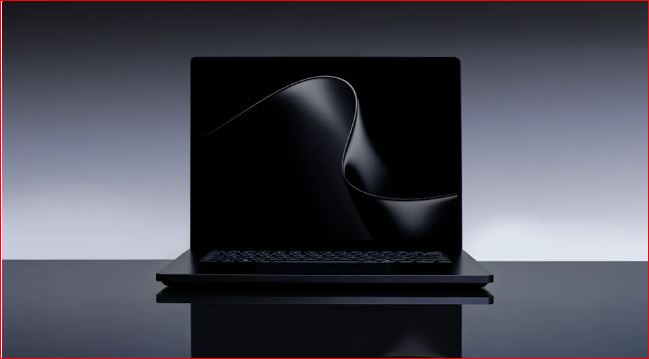
Microsoft’s Surface Laptop Ultra: How an Nvidia-Powered Windows Laptop Could Reshape the AI PC Market
A Different Kind of Surface
Microsoft has spent more than a decade using its Surface line to show partners where Windows hardware could go. The newest entry is the most ambitious in years. Microsoft officially unveiled the Surface Laptop Ultra as the first full-fledged Windows PC to run on an Nvidia main processor, and said it was made for work that doesn’t fit in a standard laptop. It is a flagship aimed at a narrow, demanding audience, not a mass-market refresh.
The launch also marks a shift in how the industry talks about AI computing. For years the heavy lifting happened in remote data centers. The Surface Laptop Ultra is built on the opposite premise: serious AI work can happen on your own machine, on your desk or in your bag.
The Chip at the Center: Nvidia RTX Spark
The Surface Laptop Ultra runs on Nvidia’s RTX Spark. Microsoft described the machine as its most powerful Surface laptop yet and the first to use Nvidia’s new Arm-based RTX Spark platform. TechSpot reports the chip is a system-on-chip based on the Grace Blackwell architecture.
Spanish-language coverage describes the platform as combining a 20-core CPU and a Blackwell GPU with 6,144 CUDA cores in a single piece of silicon. Putting both processors on one chip is what makes the unified-memory approach possible, and that approach is arguably the machine’s defining feature.
The “Spark” name is familiar to anyone following Nvidia’s recent products. The chip is similar to the one in Nvidia’s Spark line of AI desktop machines, according to The Verge, as cited by Axios. In effect, a compact version of Nvidia’s AI-desktop hardware has been brought into a laptop chassis.
One Petaflop and 128GB of Unified Memory
Two numbers dominate the announcement: compute and memory.
On compute, the chip delivers one petaflop of AI compute, which lets the laptop run 120-billion-parameter AI models locally without sending data to the cloud. Models of that size usually need data-center hardware or multi-GPU workstations. Running them on a laptop is a notable claim, though real-world performance will only be clear once independent reviewers have tested the shipping hardware.
On memory, Microsoft said the laptop will support up to 128GB of unified memory and full CUDA support. Unified memory matters because a model’s size is limited by how much memory the processor can address. In a conventional laptop with a discrete GPU, the GPU has its own small pool of video memory, which caps the models it can load. With unified memory, resources are allocated dynamically between the CPU and GPU depending on the workload.
Boing Boing’s coverage draws the Apple comparison directly. Arm chips with unified memory made Apple Silicon fast and efficient when it arrived in 2020, and the ability to give the GPU all that RAM made those machines popular for local AI experimentation. Microsoft and Nvidia are clearly aiming at that same audience, and the same article notes Apple’s high-memory machines have become hard to find.
Full CUDA Support: The Developer Hook
Raw specs matter less to developers than software compatibility. Much of the AI ecosystem, including training frameworks, inference libraries and research code, is built around Nvidia’s CUDA platform. By promising full CUDA support, Microsoft gives AI developers a reason to consider Windows on Arm, which has historically lacked that kind of ecosystem pull.
One analysis notes the launch could strengthen the Windows on Arm developer story by giving software vendors a concrete, high-memory, GPU-accelerated target to optimize for. A platform’s success often depends on whether developers bother to build for it, and a powerful, CUDA-capable reference device is a strong incentive.
The Display and Design
Beyond the silicon, the hardware is aimed at creative professionals. The screen is a 15-inch mini-LED PixelSense Ultra touchscreen with 2,000 nits of peak HDR brightness and 262 pixels per inch. Microsoft called it the brightest display it has ever shipped. That suits colorists, video editors and designers who need both brightness and color accuracy.
The input hardware gets attention too. The laptop has the largest haptic touchpad Microsoft has ever put in a Surface laptop. For physical design, TechSpot says it uses a standard design without the more experimental elements seen in earlier Surface devices. Microsoft is leaning on performance rather than a gimmick like a hinge or detachable screen.
Practical details are covered as well. The laptop weighs a little under 4.5 pounds and offers HDMI, USB-C, USB-A, SD card and headphone ports. A full set of ports is a pointed choice at a time when many thin laptops drop connectivity, and it signals a machine meant for real workflows with cameras, displays and peripherals. It will come in Platinum and Nightfall color options.
Who It’s For
Microsoft isn’t pitching this to everyone. Coverage describes it as targeting creators, developers and engineers who need local AI processing at scale. Microsoft is also positioning it as a MacBook Pro alternative for creators, developers, AI researchers and other professionals, and calls it the most powerful device it has ever made.
For enterprise buyers, there are two angles. Redmondmag sees the device as a sign that Microsoft wants more AI work to happen locally on Windows devices, rather than as a typical PC refresh. It also fits a split in Microsoft’s lineup. The company recently refreshed its Surface for Business models around Intel’s latest Core Ultra processors, with a focus on performance and built-in AI for enterprise customers. The Ultra sits above that line as a narrower, specialized product.
One report says it replaces the Surface Laptop Studio 2 and the discontinued Surface Book line as the premium option with advanced graphics. That would make it the successor to Microsoft’s previous graphics-focused laptops.
Privacy and Security: The Local-AI Argument
Running models locally has a privacy benefit. Sending sensitive documents, source code or client data to a cloud service makes many organizations uneasy. TechSpot says local processing addresses a key concern among privacy advocates and power users about how AI features work on phones and PCs.
The security approach appears layered. Nvidia says RTX Spark is designed to be secure from the ground up, using the OpenShell runtime with Microsoft-designed security and containment primitives, and supports the open-source, self-hosted agent frameworks Hermes and OpenClaw. Support for those frameworks suggests Microsoft expects buyers to run autonomous AI agents locally, which is also why containment matters, since agents that act on a machine need clear boundaries.
A Broader Nvidia-Windows Push
The Surface Laptop Ultra is part of a bigger story. Nvidia-powered Windows laptops and desktops are also coming this fall from Asus, Dell, HP and Lenovo, among others. Boing Boing’s coverage names Asus, Acer and Dell as makers of similarly equipped Spark models. The lists of partners differ slightly between reports, so check for official confirmation as launch dates approach.
Nvidia’s CEO framed it in sweeping terms. “The PC is being reinvented,” Jensen Huang said in a statement. The announcement came at Computex 2026, where Microsoft and Nvidia jointly presented the device. Appearing on one stage signals a deep partnership and puts the most prominent name in AI chips behind Windows.
The Challenges Ahead
Several obstacles stand between the announcement and success.
Price. Neither company has been forthcoming on cost. Windows Central flagged affordability before the device ships, suggesting premium pricing could limit it to a narrow high-end market. Boing Boing is blunter, saying the top configuration looks expensive, and it points out that the similar Spark desktop workstation costs around $4,500. That comparison is a hint, not a confirmed price, since a laptop with a premium display and chassis could land elsewhere.
Missing details. Axios notes that Microsoft and Nvidia were short on big details. Pricing, exact configurations, battery life, thermals and precise availability are still open questions. The company has said only that it is expected to launch later this year.
Microsoft’s AI PC track record. The first AI PC effort, the Copilot+ PC, was marred by a lengthy delay and security concerns over its signature Recall feature. Microsoft will need a smoother execution this time.
Windows on Arm compatibility. Windows on Arm has made progress, but software compatibility has long been a concern for buyers. CUDA support helps with AI workloads, but creative professionals will still want to know that their everyday applications run well on the platform.
Why It Matters for the Industry
If Microsoft and Nvidia deliver, the effects could extend beyond one laptop.
First, it would normalize the idea that high-end AI development doesn’t require a server rack or cloud subscription. Students, independent developers and small teams could experiment with large models on hardware they own.
Second, it would intensify competition in premium laptops. Apple’s high-memory MacBook Pros have been the default choice for local AI work, and a CUDA-capable Windows alternative gives buyers a real choice. For developers whose pipelines depend on Nvidia’s software, it could be the more natural fit.
Third, it could reposition Windows on Arm. Microsoft and Nvidia are trying to push Windows on Arm beyond thin-and-light productivity PCs. Success here could make Arm a credible platform for demanding workloads and not only for efficiency.
Finally, it reflects a broader industry belief. While most AI work has been done in the cloud, the push to run things locally could find newly receptive ears. Privacy, latency and cost all push in that direction.
The Bottom Line
The Surface Laptop Ultra is a statement product: an Nvidia Arm chip, a petaflop of AI compute, 128GB of unified memory, CUDA support and a bright mini-LED display in a portable form. It targets a specific group of professionals rather than the general public, and its success will depend on price, software compatibility and Microsoft’s ability to avoid the stumbles that hurt its earlier AI PC push. If the details hold up when it ships later this year, it could change what people expect from a Windows laptop.
FAQs
1. What chip does the Surface Laptop Ultra use?
It runs on Nvidia’s Arm-based RTX Spark platform, with a Blackwell GPU and full CUDA support.
2. How much memory and AI performance does it offer?
It supports up to 128GB of unified memory and as much as 1 petaflop of AI compute. That is enough to run 120-billion-parameter models locally.
3. When will it be available, and how much will it cost?
It is expected to launch later this year. Pricing has not been confirmed in the coverage reviewed here.
4. What kind of display does it have?
A 15-inch mini-LED PixelSense Ultra touchscreen with 2,000 nits of peak HDR brightness and 262 pixels per inch.
5. Who is it designed for?
Creators, developers and engineers who need local AI processing at scale. It is not aimed at everyday users.
Visit OUR Website:
Website:
Visit SOCIAL Media
YouTube:
Facebook:
Pinterest:
#everyone #viralfb #viralfbpost #viral #viralpost #foryoü #trending #trendings #trendingnow #foryouシ


