

The Eternal Songbird Takes Flight: Asha Bhosle’s Legendary Voice Falls Silent at 92 – A Heartfelt, Unforgettable Tribute to Bollywood’s Timeless Queen
Bollywood’s Timeless Queen
The Eternal Songbird Takes Flight: Asha Bhosle’s Legendary Voice Falls Silent at 92 – A Heartfelt, Unforgettable Tribute to Bollywood’s Timeless Queen
In the hushed hours of April 12, 2026, Mumbai lost one of its brightest stars. Veteran playback singer Asha Bhosle, the unparalleled voice that danced through seven decades of Indian cinema, breathed her last at the age of 92 at Breach Candy Hospital. The news, first highlighted in poignant detail by Ananda Bazar Patrika’s editorial essay, has sent shockwaves across India and the global diaspora. Multiple organ failure following a brief but intense battle with cardiac and respiratory complications claimed the legend who once confessed she had recorded more songs than she could count—over 12,000 in more than a dozen languages. Her son, Anand Bhosle, confirmed the heartbreaking passing, with last rites scheduled at Shivaji Park amid an outpouring of grief from fans, filmmakers, and world leaders alike.
This is not just the end of a life; it is the quieting of a voice that defined joy, heartbreak, rebellion, and romance for generations. Asha Bhosle’s melodies were the heartbeat of Bollywood’s golden and silver eras. From the sultry whispers of “Dum Maro Dum” in Hare Rama Hare Krishna to the electrifying energy of “Chura Liya Hai Tumne Jo Dil Ko,” her range was boundless—soft lullabies one moment, thunderous cabaret numbers the next. She wasn’t merely a singer; she was a force that elevated playback singing into an art form that transcended language, culture, and borders. As tributes flood social media and newsrooms, one truth stands clear: the melody may have faded, but its echo will resonate forever.
Born Ashalata Dinanath Mangeshkar on September 8, 1933, in the quiet town of Sangli, Maharashtra, Asha entered the world surrounded by music. The Mangeshkar family was already steeped in classical traditions—her father, Dinanath Mangeshkar, a renowned stage actor and musician, and her siblings, including elder sister Lata, destined for greatness. Tragedy struck early when Dinanath passed away in 1942, leaving the family to fend for themselves in Pune and later Mumbai. Young Asha, barely a teenager, began performing on stage and in small films to support her household. Her debut as a playback singer came in 1948 with the song “Saawan Aaya” for the film Chunaria, but it was the 1950s that truly ignited her spark. Unlike her sister Lata, who often embodied ethereal purity, Asha carved a niche with her bold, versatile, and sometimes mischievous timbre—perfect for the vivacious heroines of the post-Independence cinema boom.
Bollywood’s Timeless Queen
By the early 1960s, Asha had become the go-to voice for composers seeking something fresh and fiery. Her collaboration with music maestro Rahul Dev Burman (whom she later married in a second union after personal trials) produced some of Hindi cinema’s most iconic tracks. Who can forget the intoxicating beats of “O Haseena Zulfon Wali” from Teesri Manzil or the playful seduction in “Piya Tu Ab To Aaja” from Caravan? These weren’t just songs; they were cultural phenomena that captured the swinging 70s spirit of a newly confident India. Asha recorded in Hindi, Bengali, Marathi, Gujarati, Telugu, Tamil, Kannada, and even English and Russian—proving her adaptability long before “world music” became a genre. Her work in regional cinema, especially Bengali and Marathi films, earned her a special place in hearts across the subcontinent, as noted in the Ananda Bazar tribute that celebrated her roots in Maharashtra while honoring her pan-Indian appeal.
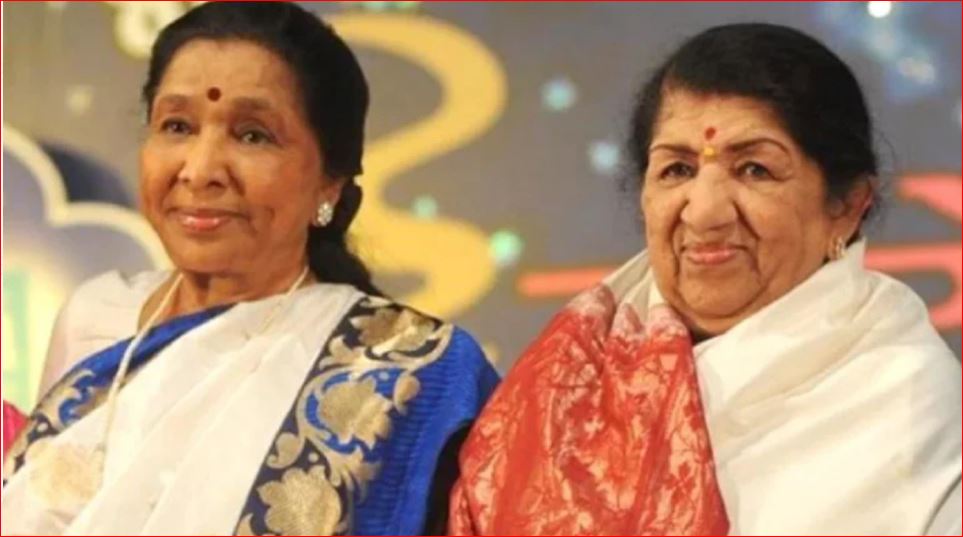
The bond with Lata Mangeshkar, her elder sister, added layers of complexity and beauty to their shared legacy. Often compared yet deeply supportive, the sisters dominated the industry together and apart. While Lata’s voice soared like a gentle breeze, Asha’s crackled with earthier passion. Rare joint performances, such as their duets in Mughal-e-Azam or later stage shows, remain treasures. In later years, after Lata’s passing in 2022, Asha became the last pillar of that golden Mangeshkar era. Their sibling rivalry, if any, was overshadowed by mutual admiration—Asha once remarked in interviews that Lata’s guidance shaped her early technique. The image of the two legends side by side, smiling in shared pride, evokes a warmth that fans will cherish amid today’s sorrow.
Asha’s career defied every norm. In an era when female singers were often typecast, she embraced experimentation. She lent her voice to vamps and vixens in films like Karz (“Ek Main Aur Ek Tu”) and brought sophistication to ghazals and bhajans alike. Internationally, she collaborated with legends like the Metropole Orchestra in the Netherlands for live renditions of her hits, drawing sold-out crowds in the US, UK, and beyond. Two Grammy nominations underscored her global stature, though she remained humble, often crediting her fans and composers for her success. Beyond music, she ventured into business with the Asha Bhosle Restaurant chain, blending her love for food with her artistic persona. Even in her 80s and 90s, she continued selective recordings and concerts, proving age was no barrier to passion.
Her personal life, though kept private, mirrored the resilience in her songs. Married twice—first to Ganpat Bhosle, with whom she had children including son Anand—she navigated challenges with quiet strength. Anand’s confirmation of her passing spoke volumes of a family bound by love and legacy. In her final days, hospitalized after a chest infection escalated, Asha reportedly remained surrounded by loved ones, her spirit unbroken even as her body weakened. Prime Minister Narendra Modi led national tributes, calling her “a voice that united India through its emotions.” Bollywood giants like Amitabh Bachchan, Shah Rukh Khan, and composers like A.R. Rahman flooded platforms with memories: “Her songs were the soundtrack of our lives,” one star noted. Social media exploded with fan edits of her classics, from Umrao Jaan‘s haunting “Dil Cheez Kya Hai” to the disco fever of Don‘s “Yeh Mera Dil.”
What made Asha Bhosle truly immortal was her emotional intelligence. She didn’t just sing notes; she inhabited characters. Directors like Vijay Anand and Gulzar crafted scenes around her voice because it could convey a thousand unsaid words. In Umrao Jaan, her thumri infused courtesan poetry with raw longing. In Sholay, the folksy “Mehbooba Mehbooba” became a cultural staple. Her live performances were legendary—whether belting out high-octane numbers with fist pumps and sari pallu swings or delivering soft, introspective ballads that brought audiences to tears. One unforgettable clip from a 2013 concert in The Hague shows her commanding the stage with a young co-singer, the orchestra swelling behind her as if time itself bowed in respect.
As India mourns, reflections turn to her broader impact. Asha democratized music. She proved a woman from modest beginnings could rule an industry dominated by male composers and stars. Her influence extended to fusion artists like Apache Indian and later pop icons who sampled her tracks. In the age of streaming, her songs rack up billions of views, introducing Gen Z to the magic of analog-era soul. The Ananda Bazar essay beautifully captured this: a life from 1933 to 2026 that bridged colonial India to a digital superpower, her voice the constant thread.
Yet, amid the accolades, Asha remained grounded. She spoke of music as service—to stories, to emotions, to the nation. In a 2005 interview, she reflected on recording during power outages and makeshift studios, laughing at the hardships that forged her discipline. Her later years included mentoring young talents and occasional TV appearances, always with that trademark smile and bindi-adorned grace.
Today, as Mumbai prepares to bid her farewell at Shivaji Park—the same grounds where legends like Lata were honored—fans light candles and play her playlists nonstop. The void is immense, but so is the gratitude. Asha Bhosle didn’t just sing; she made millions feel seen, heard, and alive. From the streets of Sangli to the red carpets of international awards, her journey was a masterclass in perseverance, versatility, and unyielding artistry.
In the words of countless admirers echoing across the web and airwaves: Thank you, Asha ji, for the songs that healed hearts, sparked romances, and fueled dreams. Your voice may be silent now, but the music you gifted will play on—in every filmi celebration, every monsoon evening, every moment when joy or sorrow needs a melody. The queen of playback has taken her final bow, but her legacy? It sings eternally.