
LeBron’s Final Regular-Season Masterpiece: Lakers Explode for 131-107 Rout of Jazz, Clinch No. 4 Seed and Ignite Playoff Fire
LeBron’s Final Regular-Season Masterpiece: Lakers Explode for 131-107 Rout of Jazz, Clinch No. 4 Seed and Ignite Playoff Fire
In the glow of Crypto.com Arena on a crisp Sunday night in April 2026, the Los Angeles Lakers delivered a statement that echoed through the Western Conference like a thunderclap. Facing a Utah Jazz squad that had already been mathematically eliminated and was playing out the string, the purple-and-gold rolled to a commanding 131-107 victory in the final game of the 2025-26 regular season. It wasn’t just a win—it was a coronation of sorts, a meticulously orchestrated tune-up that locked in the No. 4 seed and set the stage for a postseason run that feels destined for drama. LeBron James, the eternal King in his 23rd NBA campaign, orchestrated the first half like a symphony conductor before resting the second, while breakout performances from Rui Hachimura, Deandre Ayton, and a host of role players turned what could have been a sleepy finale into a dominant showcase of championship pedigree.
The final score tells only part of the story: Lakers 131, Jazz 107. But dig deeper, and the numbers paint a portrait of total Lakers control. Los Angeles shot a blistering 55% from the field (51-of-93) and drilled 44% of their threes (15-of-34), while forcing the Jazz into a miserable 21% night from beyond the arc (7-of-34). Rebounds favored the home team 49-42, assists 37-25, and the Lakers never trailed—not once. Zero lead changes. Zero ties. This was wire-to-wire domination, with the Lakers building leads that ballooned to as many as 30 points in the second half. For a team that entered the night at 52-29 and needing just one more victory to secure home-court advantage in the first round, this was the perfect send-off.
Quarter by quarter, the Lakers methodically dismantled Utah’s resistance. In the opening period, Los Angeles jumped out to a 32-22 lead, fueled by LeBron’s early aggression. The 41-year-old legend dropped 18 points, grabbed 4 rebounds, dished 6 assists, and swiped 3 steals—all in just 17 minutes. He attacked the rim with that trademark blend of power and finesse, finishing with a plus-14 rating before heading to the bench for the night as a precautionary measure. It was vintage LeBron: efficient, visionary, and utterly in command. By halftime, the score sat at 62-45, and the Jazz already looked like a team ready to book their flights home.
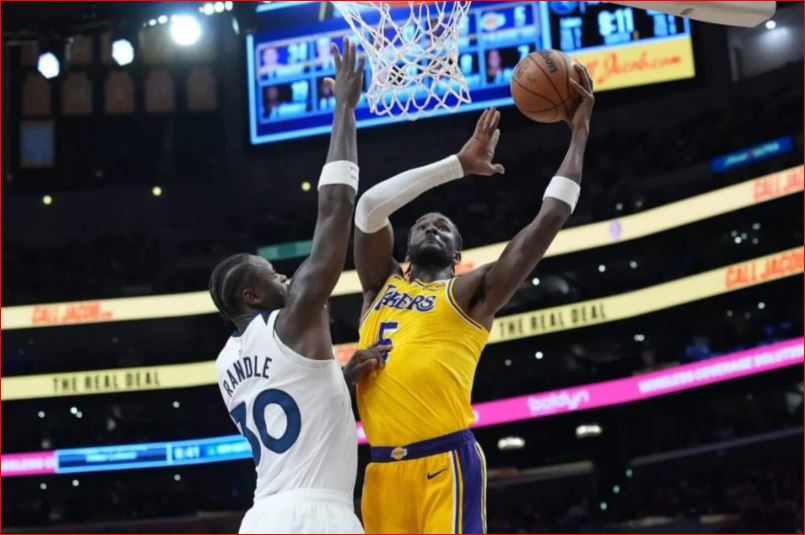
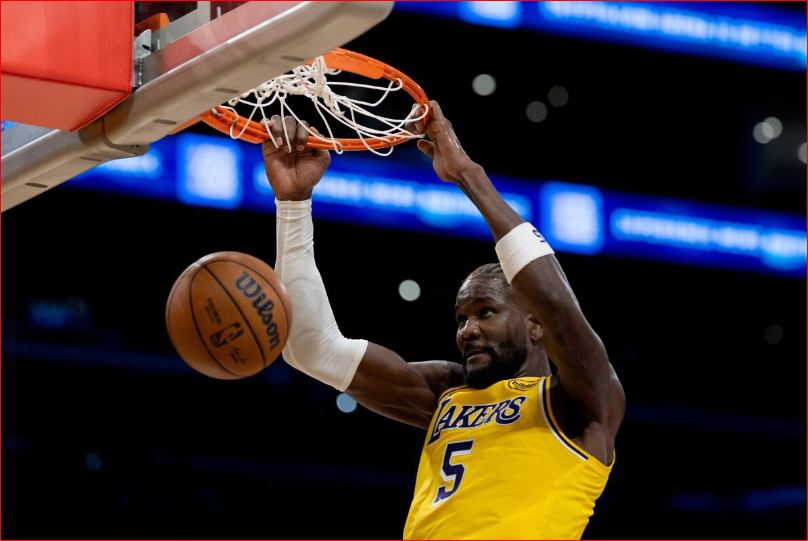
The third quarter saw the Lakers stretch the lead to 95-74, with Hachimura and Ayton emerging as the twin engines of the attack. Hachimura, the “Black Samurai,” exploded for 22 points on 8-of-12 shooting, including 3-of-5 from deep, while hauling in 10 rebounds for a double-double. His mid-range game was silky, his cuts to the basket relentless. Ayton, acquired in the offseason to bolster the frontcourt, matched him with his own 22 points and 10 boards, adding a monstrous 3 blocks that erased any hope of Jazz second-chance opportunities. The big man’s presence in the paint was a revelation—altering shots, sealing off drives, and anchoring a defense that limited Utah to just 44% shooting overall.
By the fourth, the game had long since been decided, but the Lakers kept the foot on the gas, outscoring the visitors 36-33 in a quarter that felt more like an exhibition than a competitive contest. Emerging talents shone brightly in extended minutes. Dalton Knecht, the sharp-shooting rookie, poured in 17 points off the bench, going 6-of-9 overall and an absurd 5-of-6 from three-point range. His stroke was pure, his confidence bubbling over as he knocked down catch-and-shoot bombs that had the crowd on its feet. Bronny James, in his limited but meaningful role, added 11 points on 4-of-7 shooting (3-of-4 from deep) with 4 assists in 19 minutes—father and son combining for 29 points, 10 assists, and a shared moment of legacy that fans will replay for years. Nick Smith Jr. chipped in 12 points, while Marcus Smart (despite a modest 5 points) racked up 10 assists, running the show like a veteran floor general. Even depth pieces like Jake LaRavia (2 points, 4 rebounds, 3 assists) and Adou Thiero (8 points, 4 rebounds) contributed to the balanced assault.
On the other side of the ball, the Jazz fought valiantly but were overmatched from the jump. Their record fell to a dismal 22-60, a season defined by youth, injuries, and rebuilding pains. Oscar Tshiebwe stood out as the lone bright spot for Utah, exploding for a game-high 29 points on 12-of-17 shooting and snatching 17 rebounds (9 offensive). The big man battled inside with ferocity, but he lacked consistent support. Ace Bailey added 15 points but struggled from deep (1-of-9), while Cody Williams contributed 14 points and 6 assists in 39 minutes. Bez Mbeng logged a full 48 minutes for 14 points, 9 assists, and 5 steals—a gritty effort that highlighted his all-around potential but couldn’t stem the tide. Brice Sensabaugh provided a spark with 15 points off the bench, including 3 threes, yet the Jazz’s 21% three-point shooting and 16 turnovers proved fatal. Two key players sat out with left hamstring strains, further thinning an already depleted roster.
What made this victory so electric wasn’t just the final margin or the efficient shooting—it was the narrative threads weaving through it. This was LeBron’s last regular-season game of his historic 23rd year, a campaign where he’s defied Father Time once again. Resting him in the second half wasn’t about load management alone; it was about preserving the 41-year-old for a playoff push that now features a first-round date against the Houston Rockets (as the No. 4 seed). The Lakers closed the season on a three-game winning streak, entering the postseason with momentum and a roster that feels deeper and more versatile than in recent years. Coach JJ Redick, in his first full season at the helm, has molded this group into a cohesive unit capable of switching defenses, spacing the floor, and attacking with multiple weapons.
Look at the advanced metrics, and the dominance jumps off the page. The Lakers’ 37 assists showcased beautiful ball movement—players finding the open man, cutters slicing through seams, and shooters getting clean looks. Their defensive rating in this game was stifling, with 12 steals and 6 blocks disrupting Utah’s rhythm. LeBron’s first-half steals alone created easy transition buckets. Meanwhile, the Jazz’s road woes continued; they dropped to 8-33 away from home, victims of poor perimeter shooting and an inability to generate second-chance points against Ayton’s rim protection.
This wasn’t just another box score in the annals of NBA history. It was a microcosm of the Lakers’ season: resilience in the face of early injuries, veteran leadership elevating young talent, and a front office that supplemented stars with high-IQ role players like Smart, Kennard, and Kleber. For fans who packed Crypto.com Arena, it was cathartic—a reminder that after years of playoff heartbreaks and “what if” seasons, this squad enters the 2026 postseason with genuine swagger.
As the regular season curtain falls, the Lakers turn their full attention to the playoffs. With home-court advantage in the first round secured, the focus shifts to matchups, adjustments, and the grind of April and May basketball. LeBron has made it clear in postgame whispers (and through his on-court body language) that he’s all-in for another deep run. Hachimura’s emergence as a reliable scorer, Ayton’s interior dominance, and the bench’s scoring punch (Knecht and Bronny especially) give LA layers that opponents will struggle to solve.
For the Jazz, it’s back to the drawing board. Their season was one of growth amid growing pains—developing pieces like Tshiebwe, Bailey, and Williams while navigating a tough Western Conference. They’ll enter the offseason with lottery hopes and a chance to build around their young core. But on this night, they were simply a foil for a Lakers team hitting its stride at the perfect moment.
In the end, the 131-107 blowout was more than a victory—it was a declaration. The Lakers are not just making the playoffs; they’re arriving with purpose, polish, and the quiet confidence of a team that knows its time has come. LeBron’s half-time clinic, the double-doubles from the bigs, and the spark from the next generation all pointed to one inescapable truth: this postseason could be special. As the NBA world shifts its gaze to the bracket, one thing is certain—the Lakers are locked, loaded, and ready to chase banner No. 18.