
The Untreatable Gut Invader: CDC Sounds the Alarm as Drug-Resistant Shigella Cases Surge Across America – What Every Family Needs to Know to Stay Protected

The Untreatable Gut Invader: CDC Sounds the Alarm as Drug-Resistant Shigella Cases Surge Across America – What Every Family Needs to Know to Stay Protected
In a stark public health warning that’s sending ripples through communities nationwide, the Centers for Disease Control and Prevention (CDC) has confirmed a dramatic spike in infections from a highly contagious, diarrhea-causing bacterium that’s now resistant to nearly every standard antibiotic. What was once a manageable illness mostly hitting young children has morphed into a “superbug” threat primarily striking adult men, with cases exploding from zero percent resistance levels just over a decade ago to a shocking 8.5 percent in 2023 alone.
en.wikipedia.org
This isn’t science fiction or a distant outbreak—it’s happening right now in the United States, with 510 extensively drug-resistant (XDR) Shigella isolates identified in just the first 10 months of 2023. The NBC Chicago report that first spotlighted this for local audiences pulls directly from the CDC’s latest Morbidity and Mortality Weekly Report (MMWR), published April 9, 2026. No FDA-approved oral antibiotics work against these strains anymore, leaving doctors with limited options and patients at higher risk for prolonged suffering, hospitalization, and unknowingly spreading the germ further. But here’s the good news: knowledge is your best defense. This in-depth guide unpacks everything—from the microscopic culprit to everyday habits that can stop it cold—so you can protect yourself, your loved ones, and your community.
Understanding Shigella: The Stealthy Intestinal Attacker
Shigella is a group of gram-negative bacteria that triggers shigellosis, an intestinal infection better known for its brutal gastrointestinal assault. These rod-shaped microbes (often visualized in striking microscopic detail, with their fuzzy, hair-like projections) invade the lining of the colon, sparking intense inflammation and tissue damage. Unlike many gut bugs that pass through harmlessly, Shigella is incredibly efficient: as few as 10 to 100 organisms can spark full-blown illness.
cdc.gov
Historically, shigellosis outbreaks in the U.S. targeted children under five, spreading easily in daycare settings through poor hand hygiene. Drug-susceptible strains responded well to antibiotics, and most people recovered in five to seven days with rest and fluids. But the landscape has shifted dramatically. The bacteria’s ability to evolve resistance—through genetic mutations and even sharing resistance genes with other enteric pathogens—has turned a familiar foe into a formidable one. No vaccine exists yet, making prevention our only reliable shield.
The Telltale Symptoms: When Your Gut Sounds the Alarm
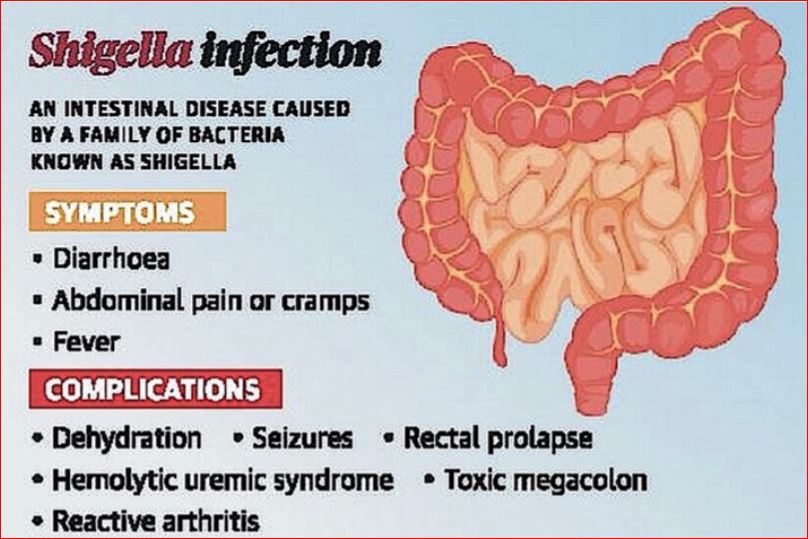
If you’ve ever endured a bout of food poisoning, you have a sense of what shigellosis feels like—but this one hits harder and faster. Symptoms typically appear one to four days after exposure and can linger beyond a week in severe cases. The hallmark is diarrhea that’s often bloody or mucus-filled, accompanied by:
- Severe stomach cramps and abdominal pain
- A persistent, urgent feeling of needing to use the bathroom even when it’s empty (called tenesmus)
- Fever
- Vomiting or nausea
- General malaise and dehydration risk
In milder cases, it might mimic a stomach flu and resolve with hydration alone. But for XDR strains, the illness can drag on, increasing dehydration dangers, especially in vulnerable groups. Hospitalization rates for these resistant cases hover around 38 percent, underscoring why early recognition matters.
shutterstock.com
Imagine a busy parent or traveler dismissing early cramps as “something I ate.” Days later, they’re sidelined, potentially passing the highly infectious bacteria to family members or coworkers. That’s why awareness is critical.
How Shigella Spreads: The Fecal-Oral Highway That’s Easier to Travel Than You Think
Transmission is brutally simple and efficient: fecal-oral route. Tiny amounts of infected feces contaminate hands, food, water, surfaces, or even sexual contact, then make their way into someone else’s mouth. It thrives in crowded environments—daycares, homeless shelters, households with poor sanitation, or among men who have sex with men (MSM) via fecal-oral exposure during intimate contact.The bacteria laughs at many common disinfectants and survives on surfaces long enough to infect the next person. Contaminated produce, undercooked food, or unwashed hands after bathroom use are classic vectors. International travel isn’t even the main driver anymore: over 82 percent of recent XDR cases reported no recent overseas trips. Domestic spread, often linked to sexual networks or close living quarters, is fueling the surge.
yalemedicine.org
This contagiousness is what makes XDR Shigella a public health threat. One infected person can spark clusters before symptoms even peak.
The CDC’s Red-Flag Data: From Zero to 8.5% Resistance in a Decade
The numbers paint a clear picture of escalation. Analyzing over 16,000 Shigella isolates with resistance testing from 2011 through October 2023, the CDC found XDR strains (resistant to ampicillin, azithromycin, ceftriaxone, ciprofloxacin, and trimethoprim-sulfamethoxazole) jumped from nonexistent (0 percent) between 2011–2015 to 8.5 percent by 2023. The first cases emerged in 2016, but 2022–2023 accounted for the bulk—415 of 492 cases with data.
cdc.gov
Demographics have flipped too. Once a children’s disease, 96 percent of XDR patients are now adults, with a median age of 41. A staggering 86 percent are men, and nearly half of those tested for HIV status (47 percent) were co-infected. Hospitalization hit 38 percent, though no deaths were recorded in the dataset. Species-wise, Shigella sonnei dominates (66 percent), but flexneri strains (often linked to more severe dysentery) are rising regionally, especially in the West and Northeast.The CDC calls this a “public health threat” because these bugs can transfer resistance genes to other bacteria, potentially worsening broader antibiotic resistance crises.
Why Treatment Is Now a Nightmare—and What Doctors Are Left With
Standard first-line antibiotics? Useless against XDR strains. No FDA-approved oral options exist as of 2026, forcing reliance on injectable alternatives or unapproved drugs like pivmecillinam or fosfomycin in desperate cases. For most healthy adults, the infection still self-resolves in 5–7 days with supportive care—plenty of fluids, electrolytes, and rest. But severe or prolonged cases, especially in immunocompromised individuals, demand careful antimicrobial susceptibility testing (AST) to guide any therapy.This resistance evolution echoes other superbugs: over-reliance on antibiotics in medicine and agriculture has accelerated it. The result? Longer illnesses, more transmission windows, and higher healthcare costs.
Who’s Most at Risk in Today’s Landscape?
Beyond the demographic shift to adult men, key groups include:
- People experiencing homelessness (crowded shelters accelerate spread)
- MSM communities (sexual transmission routes)
- Immunocompromised individuals, including those with HIV
- Young children in group care
- International travelers (though less dominant now)
Even healthy adults can carry and spread it asymptomatically for weeks.
Your Bulletproof Prevention Playbook: Simple Steps That Save Lives
Prevention boils down to breaking the fecal-oral chain—and it works. Here’s your actionable checklist:
- Master Handwashing: Scrub with soap and water for at least 20 seconds—after bathroom use, before eating, after changing diapers, and before preparing food. Alcohol-based sanitizers are a weak backup; soap physically removes the bacteria.
wakemed.org - Safe Food and Water Habits: Wash produce thoroughly, cook meats to safe temperatures, and avoid unpasteurized dairy or untreated water.
- Hygiene in Intimate Settings: For MSM or close-contact scenarios, thorough cleaning before and after sex, barrier methods, and open communication about symptoms reduce risk.
- Surface and Diaper Protocols: Disinfect shared spaces; isolate sick individuals where possible.
- Stay Home When Sick: Don’t prepare food or attend group events until symptoms clear for at least 48 hours.
Public health campaigns emphasize these basics because vaccines remain unavailable.
If You Suspect Infection: Act Fast, Test Smart
Seek medical care for bloody diarrhea, high fever, dehydration signs (dry mouth, dizziness), or symptoms lasting over three days. Request stool testing with AST if antibiotics are considered. Most cases need only supportive care, but prompt reporting helps track outbreaks.
Looking Ahead: Hope on the Horizon Amid the Warning
The CDC urges clinicians to test aggressively, report cases (shigellosis is nationally notifiable), and prioritize prevention in high-risk groups. Research into new therapies and vaccines continues, but individual vigilance remains our strongest weapon today. This surge isn’t inevitable doom—it’s a call to smarter hygiene in an antibiotic-stressed world.By staying informed, washing hands religiously, and supporting public health efforts, we can blunt this superbug’s impact. The gut invader is evolving, but so can our defenses. Share this guide, talk to your doctor about risks, and remember: one small habit change can protect thousands. Stay safe, America—your health depends on it.